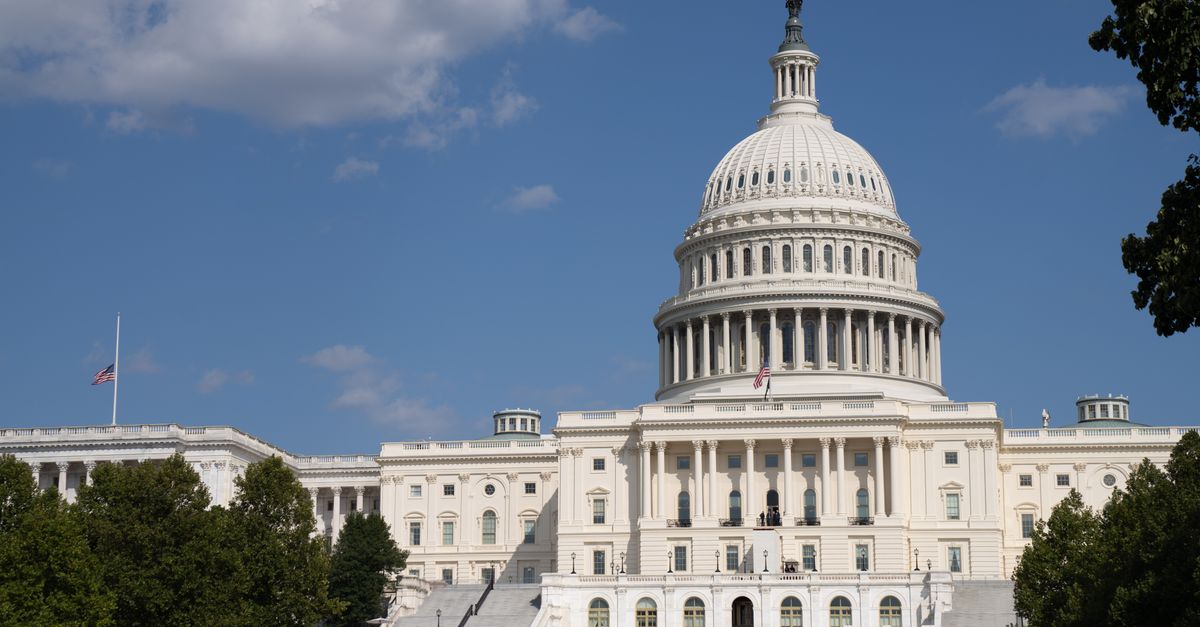
WASHINGTON — The House passed a funding stopgap bill that would extend federal funding to Dec. 11 and prevent a government shutdown as Congress heads toward midterm elections, according to Dealbreaker. Members voted 370-48 to pass the continuing resolution, and the vote met the two-thirds majority necessary to fast track the bill under a suspension of the rules, according to Dealbreaker. The bill originated in the Senate through a bipartisan deal, with the upper chamber passing it in August, and it now goes to the desk of President Donald Trump, who is expected to sign it into law, according to Dealbreaker.
Legislative path and vote mechanics
The continuing resolution gives Congress until Dec. 11 to pass full-year appropriations, according to Dealbreaker. The House passed the measure yesterday by a 370-48 vote, and it was advanced under suspension of the rules, which required a two-thirds majority, according to Dealbreaker. The bill originated in the Senate through a bipartisan deal and was passed by the Senate in August, according to Dealbreaker.
Defense funding terms and restrictions
For the Defense Department, the continuing resolution ensures that current weapons programs can be funded at fiscal 2026 levels and prevents a situation in which civilians are furloughed and troops must work without pay, according to Dealbreaker. The bill includes boilerplate language common in most continuing resolutions that prohibits using funding to start new programs or multiyear contracts, according to Dealbreaker.
What was not included: requested Pentagon anomalies
The bill does not include most of the anomalies, or special funding exemptions, requested by the White House on behalf of the Pentagon, according to Dealbreaker. Dealbreaker reported that the list of unfunded anomalies includes a White House request for $1 billion for the Trump-class battleship to begin advanced procurement of the nuclear propulsion system.
Dealbreaker also reported that the bill does not include a request for language that would have allowed the Pentagon to obligate funding for five key munitions programs: the Patriot system’s PAC-3 interceptor, the Tomahawk cruise missile, AMRAAM air-to-air missiles, and two different Standard Missile-3 variants. The White House warned that the department “may incur cancellation liabilities on multi-year procurement contracts if it does not order the negotiated production quantities,” according to Dealbreaker.
The bill also does not include a request for language that would have exempted funding granted in last year’s reconciliation bill from sequestration, or automatic spending cuts, according to Dealbreaker. Without the exemption, the White House said about 8 percent of the unobligated reconciliation funds would be made unavailable when the new fiscal year starts on Oct. 1, according to Dealbreaker.
Lawmaker statements and intra-party messaging
House Appropriations Committee Chairman Tom Cole, R-Okla., described the measure as a “clean, short-term continuing resolution” and said it “simply keeps the government open” while “preserv[ing] the path to full-year appropriations,” according to Dealbreaker. Cole also said the bill “protects our national security” by providing funding for armed forces and security agencies and preserving authorities for core research and development programs, according to Dealbreaker.
At a press conference this morning, Rep. Pete Aguilar, the House Democratic Caucus chair, said he projected “broad bipartisan support” for the bill, according to Dealbreaker. Aguilar said Rep. Rosa DeLauro, the top Democrat on the House Appropriations Committee, encouraged members to vote yes on the continuing resolution during a caucus meeting that morning, according to Dealbreaker.
Rep. Betty McCollum, ranking member of the House Appropriations defense subcommittee, praised the bill for excluding Iran war funding and said the continuing resolution “does not have funding that the president requested in his supplemental for the war in Iran,” according to Dealbreaker.
(As a matter of widely-known context, continuing resolutions are typically used by Congress to extend prior-year or current funding levels temporarily when full-year appropriations have not been enacted.)